
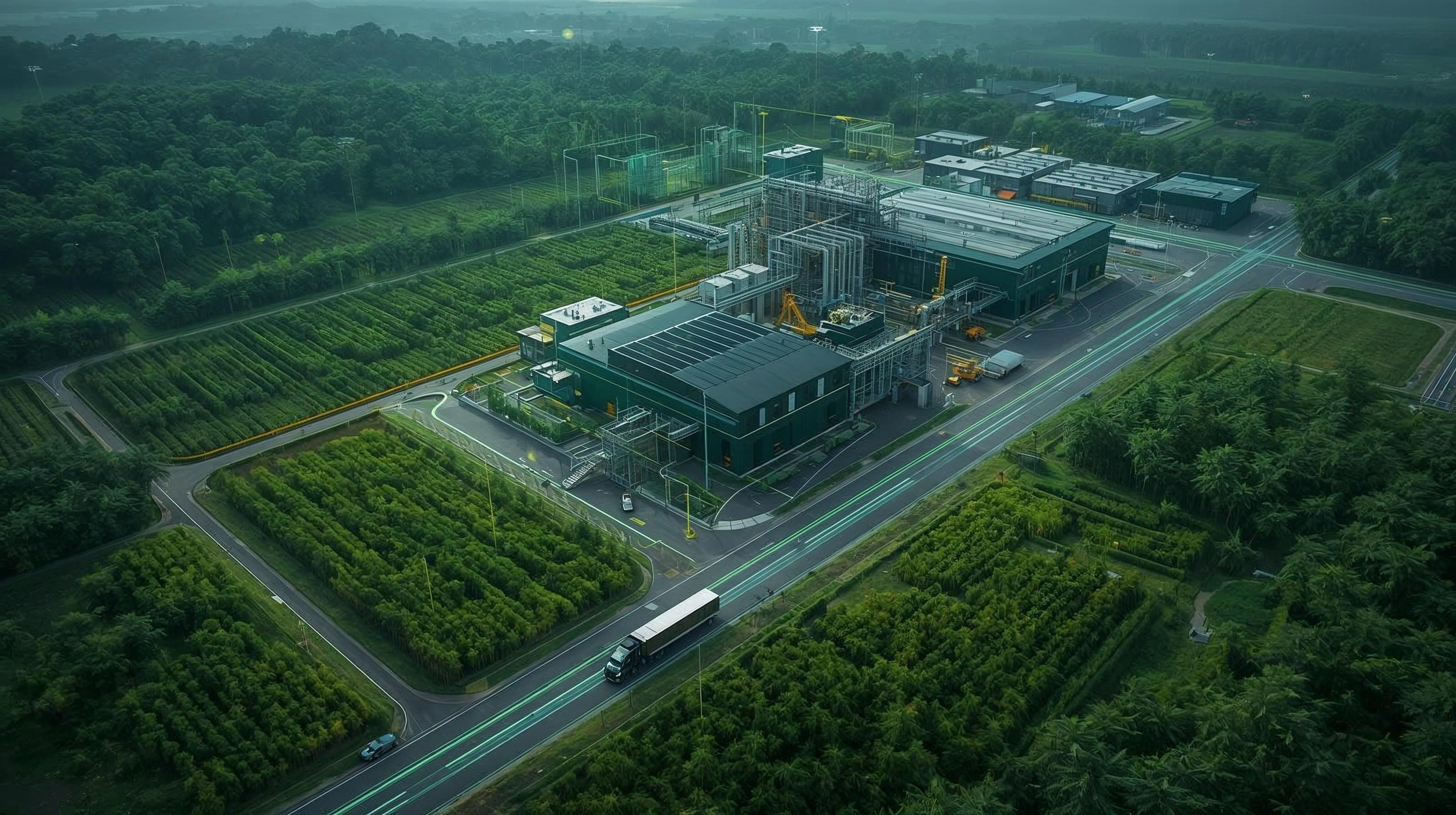
Industrial Capacity Is the Asset.
AFG develops and scales domestic industrial fiber processing capacity to supply U.S. manufacturing, defense, energy, construction, and consumer sectors requiring verified, non-FEOC, traceable material inputs.
For Investors
A new U.S. industrial asset class.
American Fiber Group builds and operates natural-fiber processing infrastructure—assets that convert hemp and bamboo into DBX-certified industrial feedstocks for construction, composites, textiles, molded components, and advanced manufacturing.
This is infrastructure with throughput, yield, margins, and multi-market demand.
AFG’s hubs function as:
Regional aggregation and preprocessing centers
Grading & certification facilities (DBX)
Fiber conversion and engineered material production lines
Industrial supply nodes feeding high-volume manufacturers
We operate at the intersection of:
FEOC risk mitigation
IRA 45X manufacturing incentives
BABA-compliant procurement
Defense supply chain reshoring
Rural industrial redevelopment
Demand is driven by structural shifts, not trends:
Automotive replacing petro-plastics
Construction moving to engineered fiber panels
Energy transitioning to composite components
Packaging leaving petroleum
Defense rewriting its China exposure
AFG’s model is simple:
Standards create trust.
Infrastructure creates supply.
Manufacturing creates scale.
Communities capture the upside.
Investors participate through:
Infrastructure financing
Facility acquisition & redevelopment
Joint ventures with OEMs
Regional hub co-ownership
Strategic expansion capital
This is the beginning of the natural-fiber industrial base in America.
AFG is the platform.

Building Demand Through Industry Leadership
AFG doesn't compete on price or ad spend. We compete on industry leadership and cause-based economic narrative.
Fiber Foundry builds demand.
Through cause-based marketing and transparent supply chain storytelling, Fiber Foundry acquires conscious consumers at lower CAC (customer acquisition cost) than ad-based competitors. Consumers choose AFG materials because they represent the new economy—domestic, regenerative, transparent. They're convinced by movement, not click-through ads.
B2B supply captures institutional demand we generate.
When procurement teams see AFG materials in consumer retail, they recognize supply chain legitimacy. When they learn that AFG materials are traceable, domestically-sourced, and carbon-verified, they see infrastructure authority. This justifies premium pricing for industrial supply contracts and enables long-term OEM partnerships competitors can't match.
Net result:
Lower customer acquisition cost through cause-based marketing + higher procurement pricing through brand authority = superior unit economics vs. commodity competitors.

The Investment Thesis
The reshoring cycle is real.
Defense, construction, automotive, consumer goods, and energy transition sectors are reorganizing around domestic content requirements and supply chain sovereignty.
The constraint is not demand.
The constraint is material capacity.
Hemp and bamboo industrial fibers are already used globally in:
Automotive components
Architectural and construction materials
Electrical insulation & EV systems
Composite reinforcement & defense applications
Packaging & molded fiber goods
The performance is proven. The applications are established.
The U.S. lacks the processing infrastructure.
AFG builds that infrastructure.
INVESTMENT HIGHLIGHTS
$250B+ Addressable Market
Automotive lightweighting, renewable energy infrastructure, defense composites, and construction materials represent combined annual procurement exceeding $50 billion across sectors where hemp/bamboo can compete on cost and performance.
Federal Policy Tailwinds
IRA 45X manufacturing credits, USDA Rural Development grants, BABA domestic content requirements, and DoD supply chain resilience mandates create structural demand for domestic biofiber processing capacity.
Strategic Optionality
Beyond core manufacturing, AFG has line-of-sight to:
Defense procurement (ballistic composites, supercapacitors, UAV components)
EPA Superfund remediation (phytoremediation + industrial feedstock conversion)
Critical materials supply chains (graphene, carbon nanotubes, biochar)
Proven Execution Model
Management team has facility acquisition, manufacturing scale-up, and B2B sales experience. Sell-first approach de-risks capital deployment by validating demand before infrastructure spend.


MARKET VALIDATION
Proven Applications with Validated Economics
Automotive Composites
Hemp fiber composites already deployed by BMW, Ford, and Mercedes-Benz for door panels, dashboards, and interior trim. 20-30% weight reduction vs. fiberglass, meeting FMVSS 302 flammability standards.
Renewable Energy Carbons
Bamboo-derived activated carbons for supercapacitors demonstrate 2× commercial performance (594 F/g vs. 300 F/g) with $50M+ military contracts already awarded to domestic producers using similar feedstocks.
Defense Materials
Bamboo/hemp ballistic composites show 22% superior performance vs. aramid (NIJ-certified), 31% cost reduction, and eliminate China supply chain dependency for critical protective systems.
Construction Materials
Hemp-lime insulation and structural panels meet ASTM C518 thermal performance standards, qualify for LEED credits, and provide carbon-negative building materials for commercial construction..
POLICY ALIGNMENT
Federal Incentives Create Structural Advantage
IRA 45X Manufacturing Credits
Advanced manufacturing production credits for domestic biofiber processing and carbon material production. Credits range from $0.75-$3.00 per pound depending on material category.
USDA Rural Development Grants
Value-Added Producer Grants (up to $250K) and Rural Energy for America Program (REAP) grants for bioeconomy infrastructure in agricultural regions.
BABA Domestic Content Requirements
Build America, Buy America mandates for federally funded infrastructure projects create preference for domestic biofiber materials in construction and energy projects.
DoD Supply Chain Resilience
Pentagon initiative to reduce China dependency in defense supply chains creates procurement priority for domestic composite materials and energy storage components.

COMPETITIVE POSITIONING
Why AFG Wins
Dual-Feedstock Advantage
Hemp (high cellulose, fast annual cycle) + Bamboo (high tensile strength, multi-year harvest) provides material flexibility and supply chain redundancy. Competitors focus on single feedstock.
Compliance-First Infrastructure
AFG builds QA/QC systems, LCA documentation, and certification pathways from day one. Competitors retrofit compliance post-production, creating audit risk and buyer hesitation.
Policy-Aware Capital Deployment
Every facility acquisition and product line maps to specific federal incentives (IRA 45X, USDA, BABA). We don't build infrastructure hoping for policy support—we build where policy already points.
Vertical Integration Without Greenfield Risk
Acquire existing facilities (particle board, molding) and retrofit for biofiber processing. Avoid 3-5 year greenfield timelines and permitting risk while securing immediate capacity.
Blended Finance:
Carbon Verification Reduces Cost of Capital
AFG operations generate verifiable carbon sequestration as a natural outcome of industrial hemp and bamboo cultivation. This unlocks cheaper capital through federal matching, state climate funds, and green financing structures.
Three federal/state funding mechanisms reduce private capital requirements:
EPA Superfund Partnerships
Carbon credit revenue subsidizes remediation costs. EPA prioritizes projects generating carbon offsets. AFG facilities automatically qualify, reducing project economics burden on federal budgets.
Impact: 10-15% reduction in remediation costs through carbon revenue.
USDA Conservation Funding
Perennial plantings generate soil carbon credits eligible for USDA carbon farming programs. Effectively reduces grower input costs.
Impact: $15-30 per acre annual subsidy to growers.
State Climate Funds
Most states allocate capital to projects with verified carbon reduction. AFG facilities qualify for 15-40% matching funds, directly reducing private capital required.
Example: $10M facility investment → $2-4M state climate matching funds → Net private capital required drops to $6-8M.
Result for investors: Blended capital structure reduces private equity IRR requirements from traditional 20%+ to sustainable 15-18% with federal/state co-funding participation.

Why the Timing Is Now
Five structural forces are driving accelerated capital migration:
FEOC restrictions limiting China-dependent sourcing
Domestic content incentives in grid, EV, and public infrastructure
Defense procurement requirements for U.S.-origin materials
Scope 3 carbon reporting and traceability mandates
Reliability + price stability replacing lowest-cost sourcing
This is not a trend.
This is policy-backed industrial restructuring.
Revenue Channels
Revenue Channels: Antifragile Multiple-Stream Model
AFG doesn't rely on a single revenue channel. The business model stacks revenue across industrial, consumer, climate finance, and government co-funding streams.
Year 1 Economic Model (per 1,000 acres deployed):
Primary Revenue: Industrial Materials (B2B)
Particle board, composites, textiles, filtration → Manufacturers, OEMs, builders
$1,600,000 annually
Margins: 35-50%
Customer base: Fortune 500 OEMs, industrial converters, regional builders
Contract type: Multi-year supply agreements (DBX-indexed pricing)
Secondary Revenue: Consumer Brand (B2C via Fiber Foundry)
Apparel, home furnishings, building materials → Direct-to-consumer, specialty retail
$200,000-300,000 annually
Margins: 30-40%
Customer base: Conscious consumers, sustainability-focused retailers
Strategic value: Demand generation + brand moat for B2B
Financing Benefit: Carbon Verification
Biogenic carbon credits (Verra, ACR) → Energy companies, OEM carbon offset buyers
Soil carbon programs (USDA) → Long-term conservation contracts
Avoided emissions (OEM Scope 3) → Automotive, aerospace OEMs
$200,000-350,000 annually
Reduces blended cost of capital via federal matching + green financing
Government Co-Funding: EPA Superfund & USDA
Remediation contracts (Superfund sites) → EPA cost-sharing
Conservation programs (soil health) → USDA matching
Regional development programs → State/local economic development
$50,000-100,000+ annually (variable)
Direct subsidy to operational costs
| Revenue Stream | Customer/Partner Type | Annual Value (1,000 acres) |
|---|---|---|
| Industrial Materials (B2B) | OEMs, Manufacturers, Builders | $1,600,000 |
| Consumer Brand (B2C) | Fiber Foundry DTC, Retail | $200,000-300,000 |
| Carbon Verification | Carbon funds, OEM buyers, USDA | $200,000-350,000 |
| Government Co-Funding | EPA, USDA, State programs | $50,000-100,000+ |
| Total Economic Value | Diversified Channels | $2.05M - $2.35M |
Why Revenue Diversification Matters:
AFG's revenue model is antifragile: Multiple customer types (B2B industrial, B2C consumer, government agencies, climate funds), multiple contract types (fixed volume, carbon-indexed, cost-share), multiple geographies (regional + national).
This diversification reduces customer concentration risk and creates non-correlated revenue streams:
When B2B contracts slow, carbon credits accelerate
When material pricing softens, government matching funds increase
When consumer demand peaks, it funds B2B infrastructure expansion
When one sector (automotive) contracts, another (defense) expands
Result: Predictable, stable cash flow across economic cycles and sector volatility.
Regional Industrial Development
Industrial fiber processing plants function as anchor employers in regional economies, similar to historical steel, paper, and lumber hubs.
They create:
Multi-tier manufacturing job ecosystems
Stable raw material purchase agreements for rural suppliers
Expanded local tax base and contracting activity
Qualification for state and federal economic development incentives
Where material processing capacity returns, manufacturing follows.

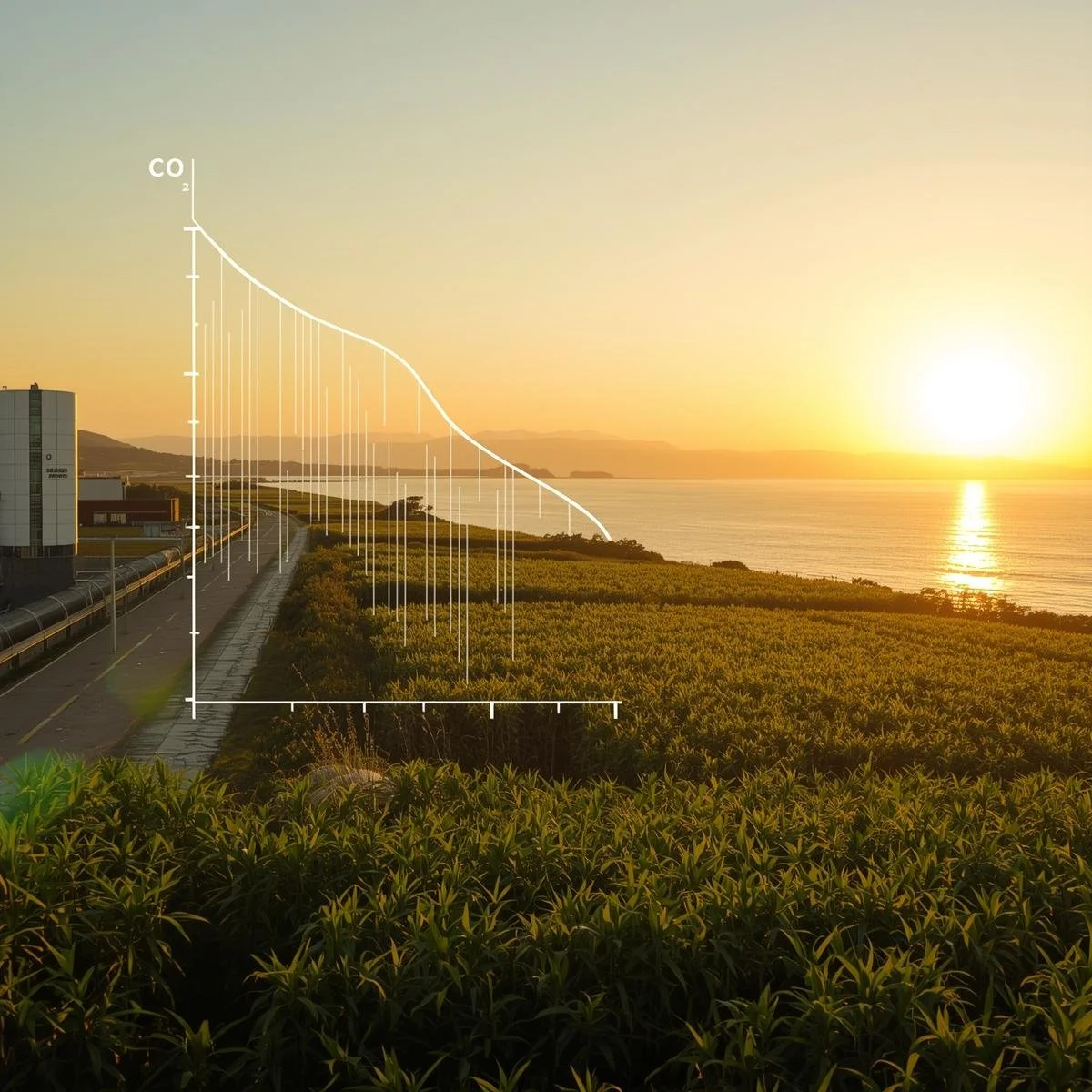
Climate Benefit as Capital Leverage
AFG is not a climate company.
We are an industrial capacity builder.
However, the carbon-negative and low-input nature of hemp and bamboo fibers qualifies our facilities for:
Green bank and DOE industrial decarbonization financing
State-level EDC matching capital
USDA & EPA rural development and remediation funds
Workforce development and apprenticeship grants
Blended finance structures that reduce cost of capital
Climate impact is the co-benefit, not the motive.
It is the lever that lowers deployment cost and accelerates scaling through matched public and private capital.
Our Model
-
Acquire Strategic Facilities
Target underutilized industrial sites to reduce capex and commissioning timelines.
-
Upgrade & Scale Processing Lines
Fiber refinement, pulp, composite feedstocks, and carbonization capacity engineered for throughput and standardization.
-
Secure Domestic Feedstock Supply
Contracted grower networks and regional aggregation ensure stability and traceability.
-
Standardize Industrial Inputs
Produce spec-grade materials compatible with existing manufacturing systems.
Primary Return Drivers:
Acquisition arbitrage on undervalued industrial assets
Throughput expansion and material standardization
Long-term supply agreements with OEMs and Tier 1 manufacturers
Pricing premium for certified, domestic, non-FEOC fibers
Incentive alignment reducing cost of capital
Strategic Leverage:
Defense supply chain independence
Verified carbon and traceability pathways
Eligibility for domestic content procurement
Regional manufacturing revitalization incentives
Request the Investor Briefing Deck
Access the full acquisition model, facility roadmap, financial structure, and deployment timeline.
