

Carbon Infrastructure & Land Yield Economics
Restoring land value while producing industrial feedstock and compliance-grade carbon assets.
Hemp and bamboo are biogenic carbon storage systems that also repair degraded land while producing industrial materials.
This is not sustainability messaging. This is asset revaluation + cost-basis reduction.
| Output | Description | Financial Result |
|---|---|---|
| Industrial Fiber & Carbon Feedstock | For composites, filtration, energy storage | Generates revenue |
| Carbon Sequestration | Measurable & verifiable | Eligible for offsets & compliance markets |
| Soil & Land Remediation | Heavy metal + toxin uptake | Increases land asset value |
| Rural Employment & Economic Renewal | Labor, transport, processing | Supports public co-funding |
Feedstock + Carbon Asset + Land Recovery = Reduced Cost Per Unit
How It Works:
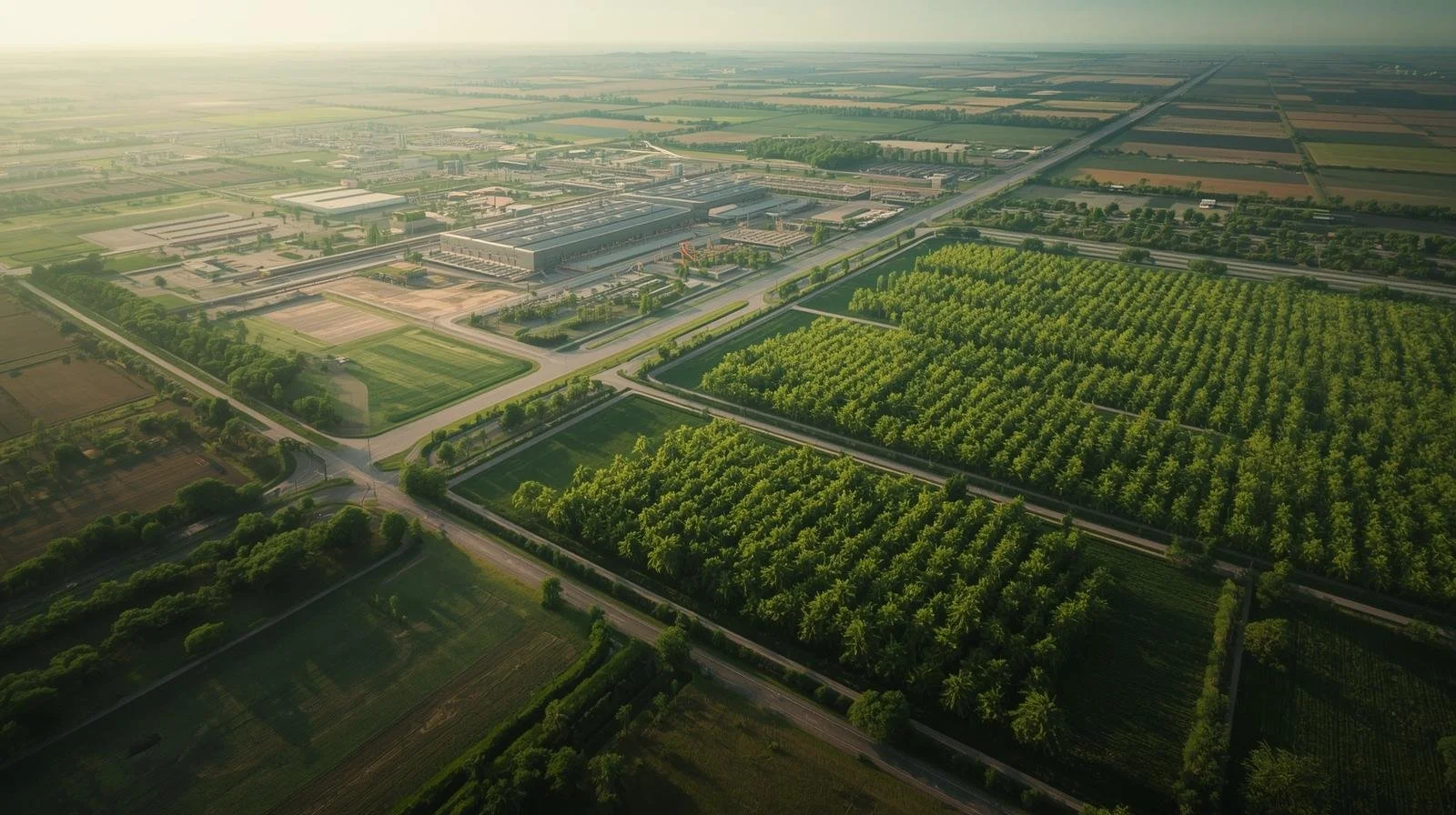
AFG deploys buffer-zone perimeter planting and brownfield reclamation models:
Along industrial site edges
On underutilized rural acreage
On post-extraction & post-industrial land (including EPA Superfund sites)
Around water infrastructure and floodplain edges
This creates:
Windbreaks
Erosion stabilization
Soil rebuild & contaminant drawdown (phytoremediation)
Continuous carbon capture
Fiber harvested from contaminated sites is processed and redeployed into non-consumable construction and infrastructure materials (insulation, panel board, concrete reinforcement), where heavy metal sequestration poses no health risk. This allows EPA Superfund sites to generate revenue from remediation biomass rather than treating it as waste.

Phytoremeditation
EPA Superfund Phytoremediation Pathway
Hemp's ability to extract heavy metals (lead, cadmium, arsenic) from contaminated soil creates a unique opportunity:
AFG establishes phytoremediation contracts with EPA-designated Superfund sites
Hemp is planted to draw contaminants from soil into biomass
Contaminated fiber is harvested and processed under containment protocols
Fiber is redeployed into non-consumable construction materials (hempcrete, insulation, panel board)
Heavy metals remain encapsulated in infrastructure materials with zero human exposure risk
This transforms Superfund sites from cleanup liabilities into revenue-generating remediation projects. EPA gets faster site closure. Municipalities get land value recovery. AFG gets feedstock supply.

Carbon Assets
Why It's Financially Efficient
| Cost Driver | Conventional Supply Chains | AFG Fiber/Carbon System |
|---|---|---|
| Land Value Trajectory | Static or negative | Appreciates through remediation |
| Carbon Exposure | Cost center | Revenue center (carbon credits) |
| Feedstock Input Cost | Market-priced | Partially subsidized by remediation funding |
| Labor Pools | Shrinking | Local employment incentives apply |
| Federal Alignment | Limited | EPA + USDA + DoD match programs eligible |
This is triple-yield economics:
Land Value ↑
Carbon Asset Yield ↑
Feedstock Cost ↓
Eligibility
Eligible Funding & Match Programs
Federal & State Programs:
EPA Brownfield & Superfund Land Reclamation Grants
USDA Conservation & Soil Carbon Programs
DoD Installation Perimeter & Buffer Zone Support
State Carbon Offset Registries
Local Economic Development Tax Alignment
Meaning: Public funding reduces private capital exposure and accelerates return timelines.
Who This Is For
Counties with abandoned industrial corridors
Rural regions seeking job base renewal
Water districts & floodplain management boards
Universities with land grant programs
Carbon funds seeking real, verifiable sequestration
Industrial facility operators with buffer or contamination edges
Request Regional Deployment Model
We provide a tailored land-use and carbon-yield economic map for your region.
